Sunday, January 1, 2023

The Books Were Wrong: Gnolls

 Sort of a play report, I suppose.

The Books Were Wrong is a "Sourcebook-Altering" game. Dan did a thing for it here, about Kobolds. Since its basically a game about empathetic fantasy anthropology, I think it was inevetable that I would do this at least once.

I choose Gnolls because their entries read like either the most heinous propaganda you've ever read, or like a report using only said heinous propaganda as sources.

Using the monster manual entry from 5e. Maybe I'll do the volos guide to monsters one later, but that ones long as shit. I'm still calling the author "Volo" out of spite though.

This can be said to be a part of my Kith and Kin setting, but but the only "canon" parts are the ones that don't contradict other things.

On Gnolls

Gnolls are feral humanoids that attack settlements along the frontiers and borderlands of civilization without warning, slaughtering victims and devouring their flesh.

Volo states that Gnolls attack settlements on "frontiers" and "borderlands" which would be the most notable element of this opening, if the entire thing were not one of the most egregious examples of demonization that I have had the misfortune of encountering.

The culture Volo was part of was a particular Youngfolk culture native to the northern coasts of the southern continent. While several centuries prior to this document this culture had been relatively confined to these regions, it rapidly expanded through both violence and diplomacy, establishing a wide territory, which lasted until a few centuries ago, with a total "lifespan" of aproximately 500 years, give or take two or three centuries based on a few ambiguities of what constitues a direct successor-state.

Volo appears to be referring to Gnoll retaliation against forces which were encroaching on traditionally Gnoll-held savannahs and rainforests at the time, characterizing this retaliation as offensive, rather than defensive. While the aggressive expansionism would be more than enough to suspect this, consultation with Gnoll oral historians appears to confirm this, and provided insight into some unexpected elements of this document.

This is characterized as "Feral" in this document, which is such an egregious example of dehumanization that I must conclude this document was intended as a propaganda peice to further galvanize military action.

Demonic Origin. The origin of the gnolls traces back to the time when the demon lord Yeenoghu found his way to the material plane and ran amok. Packs of ordinary hyenas followed in his wake, scavenging the demon lord's kills. Those hyenas were transformed into the first gnolls, parading after Yeenoghu until he was banished back to the Abyss. The Gnolls then scattered across the face of the world, a dire reminder of demonic power.

Appears to be a garbled version of a cosmogenic tale common to gnolls. While gnolls do possess distinct cultures, this tale appears to be common among the majority of the ones I had the pleasure of interacting with, though certain details differ. This is notable due to the distance these cultures had with each other (in some cases, essentially on opposing sides of the southern continent itself).

The most consistent features of the cosmogony that are relevant to this document is that some entity that embodies primordial instinct is loosed upon the world shortly following its creation, devours a vast amount of food, and then mates with itself to produce the first bands of Gnolls. The typical Gnoll conception of most divinities is that of neutral and impersonal forces which are responsible for the creation and persistence of coherent reality, which differs from the Imperial conception of divinity as "Ideological Paragons." Reverence for the spirits is seen as a direct way to empower and sustain these forces, which contrasts with the Imperial policy of binding, banishing or enslaving spirits that did not submit to them.

"Yeenoghu" appears to be a mangled mistranslation of a Hyena spirit reveared by some savannah gnolls, which was then conflated with this "Instinctual creator." Notably Volo uses this to characterize Gnolls as originating from hyenas themselves rather than addressing their status as one of the Kith, though admittedly I am unsure if Volo was aware they more closely resemble tall, bipedal baboons than Hyenas. I suspect he may have never left the central territories of the Imperium throughout his entire life.

Notably the Gnoll sources I consulted on my travels did not object to the idea of the cosmogenic entity being a "demon" as the morality of this entity is both nonexistent and irrelevant to Gnoll religion. It is revered, but mostly as an embodiment of instinct and animal wisdom, and frequently plays second fiddle to local spirits.

Nomadic Destroyers. Gnolls are dangerous because they strike at random. They emerge from the wilderness, plunder and slaughter, then move elsewhere. They attack like a plague of locusts, pillaging settlements and leaving little behind but razed buildings, gnawed corpses, and befouled land. Gnolls choose easy targets for their raids. Armored warriors holed up in a fortified castle will survive a rampaging gnoll horde unscathed, even as the towns, villages, and farms that surround the castle are ablaze, their people slaughtered and devoured.

The majority of this appears to be complete fabrication. I can find no official Imperial sources or Gnoll histories of them "razing buildings, gnawing corpses and befouling land." Even the statement armored warriors holed up in fortifications is inaccurate, as if one was at war with a Gnoll band, they would most likely be more than capable of scaling fortifications.

This appears to be pure propaganda, characterizing Gnolls as slaughterers of civilians, which is immensely hypocritical of Volo as Imperial forces are well recorded as having targeted noncombatants for terror purposes, which Volo would be aware of if he were half as informed on military exploits as he claims to be. Of course, the propagandistic nature of this text means that it is likely that Volo was outright lying for political purposes.

Gnolls rarely build permanent structures or craft anything of lasting value. They don't make weapons or armor, but scavenge such items from the corpses of their fallen victims, stringing ears, teeth, scalps, and other trophies from their foes onto their patchwork armor. 

Verifiably untrue, even Imperial sources contemporanious to Volo mention fearing the bone-hewn spears and blades of Gnolls, and making mention of Gnoll encampments in locations clearly altered and shaped for maximum comfort and habitability. The trophy hunting is, however, attested by modern Gnoll practices, oral historians and imperial sources. Make no mistake, Gnolls are warriors, but the trophy hunting is seen as a way to honor ones enemy, and is a variation of the relic-keeping funerary rites common to both Gnolls and the Broadfolk of the north (though this appears to be coincidence). The Gnolls repelling imperial aggression at the time this document was written did engage in this practice, which suggests that they felt the need to honor their fallen enemies in death despite have every justification to simply leave them to rot.

Thirst for Blood. No goodness or compassion resides in the heart of a gnoll. Like a demon, it lacks anything resembling a conscience, and can't be taught or coerced to put aside its destructive tendencies. The gnolls' frenzied bloodlust makes them an enemy to all, and when they lack a common foe, they fight among themselves. Even the most savage [Wild-Folk] avoid allying with gnolls.

 More propaganda. These are all verifiably untrue, and Gnoll bands frequently trade, ally, intermarry and share resources with Wild-Folk either native to the same area, or simply passing through. The rest is simply more demonization that doesn't even meet the minimum requirements for burden of proof to be necessary.

The culture of Gnolls is not a pacifist one, and does involve a degree of competition, but its to a similar degree that Imperial culture was, merely performed differently. The hypocrisy here is almost a tangible substance.

The alpha of a gnoll pack is the pack lord, ruling by might and cunning. A pack lord earns the best of a gnoll pack's spoils, food, valuable trinkets, and magic items. It ornaments its body with brutal piercings and grotesque trophies, dyeing its fur with demonic sigils, hoping Yeenoghu will make it invulnerable.

A mischaracterization of the leadership of a Gnoll band. The leader is typically one that is selected by the population of a band for being an exceptional leader, warrior or wise person. The ornamentation is not worth commenting on, and they tend to simply be in charge of distributing resources, rather than actually being in possession of them. While the position has been claimed by violence or underhanded methods and been abused in the past, the scale to which they can enact injustice is lower than that of imperial leadership, and comparable to other nomadic cultures that Volo was perfectly willing to sing the praises of.

The specificity of the last sentence leads me to believe he was mischaracterizing a specific wartime ritual, likely a form of reverence to a specific spirit or "god" in exchange for patronage. It is difficult to say for sure though, as despite the specificity of the ritual itself, Volo seems to be scant on details, though notably it does resemble a variation of the rites done before hunts in Gnoll culture. These rites are less in-depth than Volo describes, the fur is painted but with no "sigils." I believe the ritual described here to be a wartime variation, and thus more solemn and in-depth.

Gnolls celebrate their victories by performing demonic rituals and making blood offerings to Yeenoghu. Sometimes the demon lord rewards his worshipers by allowing one of them to be possessed by a demonic spirit. Marked as Yeenoghu's favorite, the lucky recipient becomes a fang of Yeenoghu, the chosen of the Gnoll Lord. In much the same way Yeenoghu created the first gnolls, a hyena that feasts on a fang's slain foe undergoes a horrible transformation, becoming a fullgrown adult gnoll. Depending on the number of hyenas in a region, a fang of Yeenoghu can lead to a startling increase in the gnoll population. Finding and killing the fang is the only way to keep that population in check.

As standard for this document, Volo describes vaguely defined cultural practices as "demonic." The blood offerings comment is interesting, as it may describe a form of ritual sacrifice (animal or human, Gnolls are as variable as any other culture group) enacted in celebration of a victory. The most interesting element is the description of a Gnoll being possessed by a so called "demonic spirit." This seems to be a demonization of the traditional Gnoll spiritual practices in the area, where they would invite a spirit to temporarily inhabit their own body as a way to channel their power and wisdom. The descriptions of the rapidly increasing population and "keeping them in check" grimly conclude Volos views on the Gnolls.

Having previously established the creation myth Volo described as being essentially of his own invention (albiet taking minor features from Gnoll creation myths) the details about the supposed "Fang of Yeenoghu" being able to supernaturally increase the Gnoll population is likely a misunderstanding of fertility rites that Gnoll holy folk lead, being then framed in a way to justify supression of Gnoll culture, or ousting from their traditional lands.

End Document

Monday, March 28, 2022

Sitovi Guild (Glog Class): The Undying

Congrats, you died, but you figured out how to survive anyways. People probably think you're nasty and more than a little bit cursed (if you're a carrier for diseases then they're arguably right) but the perks more than make up for it. Probably.

This is a little bit incomplete, theres no list of prosthetics for example. When I make a list of those I'll either include them here or make another post.

You may notice that the higher levels are a bit broken. They rely on a resource you need to take time to harvest, however, and if you're a greedy motherfucker who hoards all that life force then you deserve to be able to flip the table and punch the fucker giving you shit at least once.


  1. First Level 
    1. Undying: You cannot die from blood loss or feel pain. Or rather, you can feel pain but it's numbed. What kills you must be the “instant death” effects on the death and dismemberment table. Slow death effects will render you catatonic with pain (despite your normal immunities) for 1d12 hours before you recover (assuming you are not killed in the meantime). 
    2. Macabre Prosthesis: You get “Prosthetic Slots.” These are either designed or salvaged body parts. You can only have up to twice your undying level at once. However, you get “free” slots if you are missing body parts. Essentially, replacing a limb does not take up a slot, but adding them does. 
  2. Second Level 
    1. Undead: You are undead (though you were likely considered one already). This means that you no longer take damage from poisons or diseases (previously they could interfere with the channels of life energy in your body, or outright damage your cellular structure). You can still act as a “carrier” for these things, however, so be careful. Furthermore, you do not require food to survive, but may eat to recover hit points. Similarly, you do not require water or air to survive. 
    2. Revenant: When parrying, if you succeed you deal damage to the opponent equal to your undying level. You may choose to waive this for whatever reason. If you succeed you may optionally choose to take the damage anyways, in exchange for a free attack/gambit. 
  3. Third Level 
    1. Hungering: You may harvest life force. A corpse is always viable to harvest, but the total amount of life force you may extract is reduced by one die per day it has been dead. This may not apply in certain cases however (preservatives, or extremely difficult to kill entities). Life force dice are expended when used, but using too many at once can put a strain on your body. 
    2. Overcharge Prosthesis: You can expend life force to “overcharge” a prosthesis, the exact effects of which depend on the prosthesis in question and how many Life Force dice you spend. The maximum amount you can spend at once is equal to twice your undying level. 
  4. Fourth Level 
    1. A Third Way of Being: You now count as “alive” when it would be beneficial to you and “dead” when it would be beneficial to you. This means you can heal normally again, and retain the immunities of undeath. 
    2. Life Force Mastery: You may now spend life force dice to heal, or to attack others directly with it. When you spend the dice to heal, roll the dice you spent. Their Sum is how many hit points you heal. Damage works similarly, but you may split the sum between further attacks, or release them as a single ranged attack. 
Prosthesis Format 
  • Prosthetic: [Name/description] 
  • Slot: [Where it goes, what it replaces. If it's not replacing a lost part, it takes up a prosthetic slot]
  • Ability: [What it does with no modification. Can be passive, active, or whatever.]
  • Overcharge: [What happens when you force life force through it.]

Tuesday, December 21, 2021

Transing your Gender (But in the stone age)

 Just having some fun with it. D12 table of stone-age ways to trans your gender. These will vary based on the culture and area, but there is generally no overwhelming transphobia, though modern terms might not apply to a few of these. Some of these will not address dysphoria, while others may exclusively address that.

If none of these fit with how your character desires to transition, other possibilities exist. In fact, what is possible outnumbers what is impossible Infinity to one.

  1. Socially transition. Nothing else is required, as there is no division of labor, ritual or role between genders or sexes here.
  2. Deep in the stranger groves in the forests of the world lie herbs with mysterious and impossible (perhaps unique to that grove) effects. These areas are often guarded by spirits, but so long as you address them properly and do not take more than you need, you should be fine.
  3. Sorcerers and Healers of every kind exist throughout the world. Speak to one, and they are certain to have at least one answer.
  4. Why rely on some other Sorcerer for aid? Learn magic yourself and develop a ritual of your own. Such a ritual will only last [Sum]+[Dice] days, at least until you learn how to bind a permanent effect to a person. If you are only making subtle changes, these may be permanent, allowing for gradual attainment of your ideal.
  5. While rare herbs can produce sudden and dramatic effects, a mixture of common herbs can produce a slower, but no less dramatic, change. It will take some time, experimentation and skill with herbalism, but with time boundaries can fade to nothing.
  6. Spirits possess power that might be termed "magical" by those who do not understand. Whatever the case, a deal, a quest, a trial, a request or even the simple personal favor of a spirit can grant you what you seek.
  7. Take upon the social role of that which you truly are. In time, your old role will be forgotten. If your desires transgress the boundaries, you may have to distance yourself from your old society, but you would not be the first. There are others like you out there.
  8. Magical artifacts exist in the world, and are either formed by the hands of skilled sorcerers, the machinations of spirits or the natural processes of the world. You have heard stories of one that can grant you what you seek. Sifting the truth from the rumors may take some time, but will be worth it.
  9. Tricksters and underdogs are valued by many Kin cultures. If you trick a malevolent spirit into "cursing" you with what you desire, you may not just receive what you want but be whispered about as something to aspire towards.
  10. Journey deep into the, or a, spirit world and speak to an intelligence of vast and indescribable potency. A risky proposition, but such a request is as trivial as any other wish to them. You will require preparations and significant mystical skill (or someone willing to do so for you).
  11. Request a new name from either your parents, grandparents, leaders or Mystics of your tribe. Refusal may be grounds for challenging them, depending on your culture.
  12. Mutation. Probably the riskiest option here. Honestly you should just go on some quest rather than try to do this one.
More are possible, I just can't think of any right now. Lmao.

Wednesday, December 8, 2021

Sympathy: "Real" Magic

 One of the details of my own game that I have changed from its inspiration is moving away from the idea that "All magic is a spirit" or "spells are alive."

That isn't to say those are a bad way to treat magic, it just doesn't quite fit with my game.

I was initially frustrated with how magic would work (both mechanically and in-universe) in Kith and Kin.

Then I found this video about "Sympathetic Magic." No need to watch it if you really don't want to, I'll summarize the points here.

European "Poppets." Used to curse, communicate, heal, protect and more.

The Principles Of Sympathy

There are more details to these, but the three main points of Sympathetic magic are as follows.

  • Similarity: That which is alike something else may act upon it at a distance. An effect will resemble its cause. 
  • Contagion: Things which have acted upon each other in the past continue to act upon each other from that point forward. A part of something can be used to affect the whole of it.
  • Relevance: Concerning Contagion, the effectiveness of the magic is reliant upon the relevance, scale, intensity and frequency of the contact. Concerning Similarity, the effectiveness is reliant upon how similar the alike objects are.

Combining the principles is not only possible, but frequently necessary.

Magic takes the form of "Rituals" in my game, with physical and narrative components depending on the desired effect. A simple example would be using an effigy and a lock of hair to effect someone at a distance, and ritually destroying representations of eyes, to cast a blinding curse upon someone.

Mechanically though, how does this work?

"Voodoo doll." Voudou does not actually use them. The dolls nailed to trees
serve as guides to benevolent Lwa.


The Nitty Gritty

Some details about my system are necessary for this next part to make sense.

  • Ability checks, skill checks and saving throws are all the same thing. This is because the things used in them can be improved.
    • If the DC is equal to or below the ability score used, its auto-success.
    • If the DC is above the ability score used, roll a skill dice and add the entire stat. Ranging from 1d4 (unlearned), 1d6 (beginner), 1d8 (trained), 1d10 (skilled), 1d12 (expert), 1d16 (master) and 1d20 (legend). You have to roll over DCs to succeed, and a roll of 1 is always a failure.
  • No classes and no levels. I use the "X" based improvement as created by Meandering banter for "Die Trying" and adapted by Sofinhos "Pariah."
  • Characters have differing sizes for their Hit Dice (d4s, d6s, d8s or d10s). Characters with higher hit dice can take and dish out damage better. Characters with lower hit dice start with more skills and are better at magic.
  • Hit dice can be spent to do some things. They return to you when sleeping.
  • Magic is mostly freeform, the effects determined by the [dice], [sum], magical skill and ritual performed, as determined by the ritual caster (and approved by the GM).

Okay with the relevant stuff out of the way, the mechanics.

To perform magic, the sorcerer must perform a ritual lasting at least one exploration turn (10 minutes). The sorcerer describes the magical effect they desire beforehand (which determines the ritual they need to perform), and chooses how many magic dice (d6s) they want to attempt to conjure (0 or more). This determines the DC of the magic check. At the conclusion of the ritual the Sorcerer makes a check using their Knowledge (intelligence) stat and the relevant magical skill. If they succeed, they cast the spell at the magic dice they choose. If they fail, see the failure section.

Another ability score may be used under certain circumstances, but will usually be Knowledge and always be a mental ability score (Knowledge, Charisma or Willpower).

This is mostly compatible with GLOG spells, but ideally these should be a bit more powerful, as you're casting them over longer periods of time, taking more resources to do so and probably in anticipation of a threat. Curses may last for several days (unless its bound to something with another ritual). The [dice] and [sum] are the important values still, just liable to provide more. Things may last for hours, days or even weeks depending on how subtle or blatant the magic is.

Outside of magical items, I would avoid directly-damaging magic. Unless its bound to an object

DCs are a base of 20 for a 0 dice "cantrip-like" effect, with the DC raising by an amount equal to the size of your magic dice for each magic dice you add. Thus a 2 magic dice effect would be either a dc of 28, 32, 36 or 40 depending on your hit dice size.

However, depending on what is used in the ritual, you gain bonuses to this roll. A roll of 1, regardless of bonuses, is a failure. This incentivizes you to improve your skill with the magical skill, and to also perform more complex rituals.

Bonuses as below. Not comprehensive, but it does cover a lot. "Relevant" means its associated with the effect through the above laws of sympathy. If you wish to affect someone at a great distance, a Taglock is required (an extremely good effigy, a lock of hair, etc). This is a lot but its not that hard to remember I think.

  • +1 for a relevant Physical Components
    • +2 instead if many of the same component is used (a sack filled with one type of flower for example), and +3 for truly ridiculous   
    • For magical items used as ritual components, an additional +1 is used for every magic dice stored within. 
  • +1 for each type of major action taken as part of the ritual (Dancing is one. Singing is another. Major means it happens across most of the ritual time).
    • Additional participants of the ritual may add bonuses as above.
  • Scaling bonus for additional time taken for the ritual.
    • +0 For 10 minutes (base)
    • +1 for 30 minutes.
    • +2 for an hour
    • +3 for 3 hours.
    • +4 for 6 hours.
    • +5 for 12+ hours.
  • For each HD you spend in the casting, +1 (Hit dice return as normal when sleeping).
  • For each HD of animal sacrifice in the ritual, +1.
  • Scaling Bonus for altered states (ignore penalties).
    • +1 for mild altered state.
    • +3 for strong altered state.
    • +6 for overwhelming altered state.
  • Ingesting an entheogen (similar to altered states, but biased and doesn't require a roll except to avoid side effects).
    • +2 for low dose (+3 instead if associated with magic being performed).
    • +4 for powerful dose (+6 instead if associated with the magic being performed).
  • Performing at sites dedicated to entities associated with the magic being performed.
    • +2 if at a shrine.
    • +5 if at a temple, megalithic circle or other impressive site.
    • +9 if at a grand temple, immense megalithic complex or other extremely impressive site.

Oh Fuck Its a Wizard

I like this rule. So im adapting a version of it.

Magic doesn't always look magical. Certain spells will always be subtle, and certain ones will always be blatant, but if not otherwise specified by the sorcerer, spell or GM, then this scale can help out. Numbers are the amount of Magic Dice. 

  • 0: Difficult to impossible to recognize as mystical, except to one who has used magic or can see auras or something similar.
  • 1: So subtle that one might not even be able to tell magic has been cast.
  • 2: Relatively meager and subtle, but noticeably magical. 
  • 3: Obvious and somewhat impressive. People may be stunned for a moment.
  • 4: Magnificent and impactful. Morale tests required by most. 
  • 5: The area may seem to quake with their power for a moment. Even lesser spirits may hesitate for a moment.
  • 6+: The area heaves as a mighty power forces itself into creation. The sky may darken in the area for a time, Major spirits will be impressed, and greater spirits may take notice.

Failure

Failing the check results in the magic dice instead being wild dice.

Roll the wild dice and check for doubles, triples etc to determine the type of failure. 0 or 1 magic dice effects obviously won't cause higher types of failure. Multiple doubles, triples etc count together, adding one less than their tuple to the largest one rolled (so two doubles counts as a triple, two triples counts as a quintuple, three triples counts as a quadruple, a triple and a double count as a quadruple etc).

Failures are as follows.

  • Singles: Spell simply fails.
  • Doubles: Spell rebounds in some way.
  • Triples: Spell rebounds in some way, and the caster develops a superficial mutation.
  • Quadruples: Spell rebounds and caster develops a mutation.
  • Quintuples: Spell rebounds, caster develops a mutation and gains a curse template
  • Sextuples+: Spell rebounds, caster develops a mutation and gains a curse template. Also reroll for another chance at failure.

Magic Items

Magic items come in two main types. Lesser magic items contain magic dice, until they are interacted with in a specified way (or destroyed), at which point they unleash their magic dice in a specific spell effect, either on the one interacting with it or to be used by the one interacting with it (as specified by the item and on creating them). These are essentially "potions" and "scrolls."

Greater magic items contain magic dice and either have a passive effect based on the number of magic dice within, or allow you to access the magic dice to create spell effects spontaneously. These are magic items, wands, staves etc. When rolling the magic dice bound to such a device, they return to the device except on a "6." When out of magic dice, they are still magical items, but can only create 0 dice "cantrip" effects. Rituals can be used to add magic dice back to them at this point. 

Binding magic dice to an object is effectively a ritual performed after the ritual used to conjure the magic dice. The caster must state beforehand that they are summoning the dice to bind them, and weather they are creating a lesser or greater magic dice. Ill post more details about that in the next post, which will give examples of rituals/effects.

Some magic items are created by spirits, or simply naturally occurring. These might be altered by human hand, but not too significantly. (Thanks GURPs ice age for the idea, even though you're outdated as hell).

Magic Skills

Non-comprehensive list of magical skills.

  • Binding: Magical restrictions. Creation of magic circles, magic items etc. Binding spirits to things or people. Rendering effects permanent, or conditionally permanent.
  • Charms: Beguiling the mind. 
  • Conjuration: Pulling things from elsewhere. Summoning spirits. Can't be used to generate endless food or water.
  • Divination: Reading randomness to gain true information.
  • Dream weaving: Sleep, Dreams, Traveling through dreams, manipulating the dreams of others, inducing or preventing nightmares.
  • Flames: Manipulating fire, creating, destroying, protecting against or divining with it. 
  • Heavenly Arts: Weather manipulation, conjuring lightning, rain, sun or wind. Atmospheric effects.
  • Illusions: Befuddling the senses.
  • Necromancy: Power over life, death, undeath. Raising corpses as servants. Healing. Summoning and contacting spirits of the dead. Decay and entropy.
  • Spiritualism: Channeling, Contacting, Exorcizing and Banishing spirits. Interacting with them in ways other than Summoning and Binding.
  • Transformation: Becoming something else. Transforming someone else into something else.
  • True Language: Being heard from great distances. Being understood without words. Understanding and being understood by animals. Does not necessarily convey details or important information that mundane means would.
Next up, a post with some examples of rituals, and some possible effects. 

Friday, November 12, 2021

Kith and Kin: "Races" Revisited

 My old post on the "races" (more accurate to say species) of my fantasy setting is a bit outdated at this point. This time I'm going into better depth, providing picture inspiration, and such.

First I gotta get some facts out about the setting.

Various Human Species, by Ettore Mazza

Important Bits

Technology was "discovered" much earlier in our evolutionary line in this setting. Stone tools and fire are older than bipedalism (cooking too), and Agriculture started to crop up about when Bipedalism started to become more common.

This is different than the real world, but not to the levels of unbelievability I think.

Metallurgy shows up just about when the genus "homo" (the Kin) splinter away from their fellow bipedal primates, but seems to get lost and rediscovered several times.

"Higher" technology crops up at a few points, before some cataclysm seems to knock technology back to stone tools. No one knows why exactly.

Wars are quite rare, though territorial disputes and violence aren't uncommon. "State" societies are the exception, not the norm.

Rather than cities people have what we would call "Proto-Cities," settlements with both urban and rural features, often lacking something we think of when we hear "cities" (such as roads or centralized planning).

Current technological level fairly anachronistic. Nautical travel is fairly advanced, but otherwise weapons and metalworking are "copper age" at best, late stone age at most. Clothing (when it is worn) is similarly anachronistic. Fabrics are fairly advanced and used for clothing and sails, but people frequently use hide and fur as well. The regular fluctuations in technology across history have led to this anachronism, though admittedly its not that unrealistic.

The world is animistic, and this seeps into all religions as a result.

Alright. With that bit out of the way. Lets talk species.


The Kin

The lines between the Kin and other people of the world is blurry at best. However most agree that the Kin are all capable of having children with each other. These children may have health issues and infertility, however this does not occur universally. The origins of at least one of the Kin is a result of continuous hybridization like this.

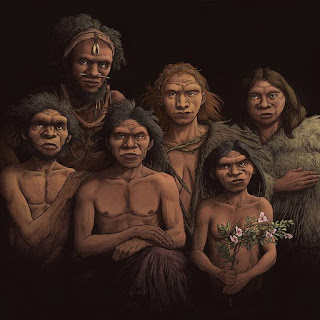
Human = Kin. These are all (inspired by) members of the Genus "Homo."


Homo Sapiens, By The Kennis Brothers

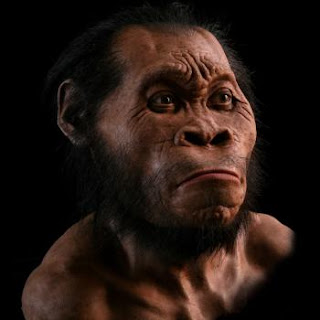
Youngfolk: Tall and frequently slender folk of the southern continent. Dark skin and complexion, though those that historically live in the norther regions of the continent trend towards more bronze complexions. Clever, though not beyond the realm of possibility for other species, and youthful in appearance. Tend towards nomadic hunter-gatherer lifestyles culturally, though River Valleys and contact with others have led to the development of significant sedentary cultures. Impulse control is higher than average for Kin as a whole.

Untitled, Probably a Neanderthal, By Tom Björklund

Broadfolk: Strong, physically broad people of the northern continent and peninsula. Skin tones range from bronze to porcelain complexion. Highly observant and very very skilled hunters. Asocial compared to the youngfolk, forming tight-knit but smaller bands as part of larger cultures. Tend towards nomadic hunter-gathering but some eastern broadfolk have begun to cultivate domesticated plants. Cold resistant, but struggle in warmer climates.

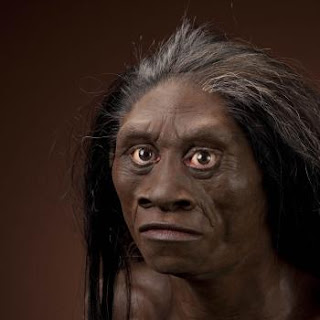
Homo Floresiensis, By John Gurche. Why does nobody cite him for this specific statue?

Smallfolk: Physically small people, but highly highly social. Towns are more like massive extended families, as are neighborhoods of urban Proto-Cities. The most urban societies are built by them, and their cultures are some of the only ones to have developed (somewhat) significant maritime power. The Cerulean Thalassocracy is mostly Smallfolk. Smallfolk also tend to avoid attempts at colonial power, preferring diplomatic arrangements over direct control or conquest. This is an extension of their highly social psychology, but Smallfolk "Empires" have existed in the past.

Homo Naledi, By John Gurche

Treefolk: Smaller than most, but not to the degree of the smallfolk. Able to walk, use stone tools and use fire like others, but are also adapted for arboreal movement. When not in settled villages they tend to weave temporary "nests" in the trees, much like other primates. The most distantly related of the Kin, able to trace their linage back to very near the beginning of the Kins existence. 

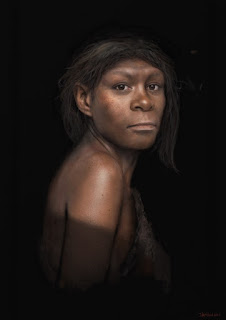
Homo Erectus Female, Also by John Gurche.

Elderfolk: Average in size for kin, not quite reaching the height of Youngfolk and definitely taller than the Smallfolk, dark of complexion and strange in their ways. The Elderfolk are a subspecies of the legendary First Wanderers who were the first of the Kin to step beyond the southern continent in significant capacity, and who built a society of incomprehensible tools and magic. While the Elderfolk have much less technology than their legendary predecessors, they do seem to be one step ahead of the curve compared to other cultures in general.


The Kith

Everyone else is grouped into the "Kith." While the Kin all have relatively the same body plan and statistics (mechanically only rerolling a stat and having a passive ability or two) the Kith significantly alter the playstyle of one who plays them. Kith are not guaranteed to be bipedal, able to speak, or able to make use of tools as effectively as other species. The only Kith species I'll put here is the Wildfolk, as I haven't gotten into much detail with the others as yet.

There are also the Underkin, a parallel genus to that of "Homo" that lives deep underground. I've figured out even less about them, and they deserve their own post.

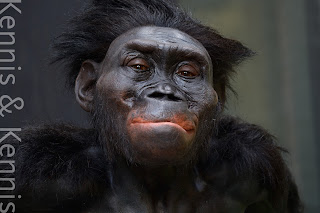
Lucy, By the Kennis Brothers. An Australopithecus Afarensis

Wildfolk: A collective term for a number of different bipedal, furred primates. Technically Homo Habilis is a member of this, though they are a human species irl, in the world of Kith and Kin the thing we use to distinguish between australopithecines and members of our genus is available to almost all primates (fire). Thus, Wildfolk are distinguished by their significant covering of body hair. The settled wildfolk there are tend towards simple agrarianism or herding, but a significant number of them are nomadic hunter-gatherers.


Friday, October 15, 2021

Five Point Magic (Part 1)

 Alright this is like draft five, had to scrap the last one cuz it was getting to complex and boring to read about. We don't want that now do we?

This is part one. Later posts are gonna be about specific settings, mechanics and individual examples of the following.

Magic in my games almost always takes one or more of the following five forms.

  1. Ritual Magic
  2. Skill Magic
  3. Rule Magic
  4. Extrinsic Magic
  5. Intrinsic Magic

Exactly how they function mechanically depends on which one it is, and the game. As do the more diegetic elements like what you need to do for the rituals.

All of these cross over a lot. They're not distinct categories, just sort of features of the games I run (and I enjoy tying mechanics together in ways that simplify the game).

In detail however...

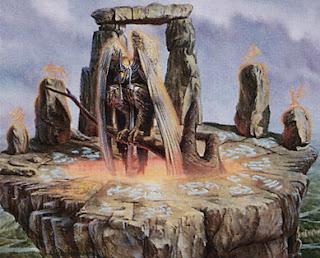
Soulcatchers Aerie from Magic the Gathering. Thank theisticGilthoniel
for enabling me.

Ritual Magic

Typically works like this, in that they have specific costs and require specific actions to gain specific results. Often they require some special method of teaching or learning them, a grimoire, scroll or ancient tablet won't cut it, but might be your "key" into actually learning it if that makes sense.

Rituals with specific effects will have specific costs, while rituals with scaling effects will have the necessary cost scale proportionally.

Some rituals may be a bit more flexible or powerful than others, these ones are often especially costly.


Skill Magic

This is for anything from weird languages to divination methods. Mechanically this is usually bound up in the skill system, if there is any. If not then they're liable to have their own sub-system. Either way this is for skills which allow you do to weird things. They aren't spells, and there isn't really a limit to how often you can do these, but they do not guarantee an effect (imagine trying to convince a boulder to get up and crush some heads).


Rule Magic

This refers to the metaphysical rules that interact with magic. Think the metaphysics behind "true names" or the "paradigm" in Magical Industrial Revolution that lets you experiment with stuff. In my own games this takes the form of True Names bestowing a moderate amount of power over the being/person, The Law of Similarity (poppets), The Law of Contagion (using someone's favorite shoes to divine facts about them) and the law of Synecdoche (a lock of hair can be used to cast magic upon someone at a distance).

Generally this is a modification to the previous two forms of magic, mechanically its more of a "theme" that persists throughout my games. "Realistic" magic, that resembles actual magical practices (but with much of the ambiguity stripped away).


Extrinsic Magic

Anything that comes from the external world. In some games this is just magical objects (think the oddities or arcana of Into The Odd) but in many others this is natural things that can be found and have mystical applications. Possibly the most ambiguous, as healing herbs are often nonmagical but still count under this.

Entheogens (psychoactives/psychobotanicals taken for ritual purposes) count under here too. If it comes from things you find, its here.


Intrinsic Magic

Magical "powers." The simplest mechanically. Here is something you can just do. Not necessarily magical in nature, as above, but includes magical things in it. Can also be weird without being magical (psychic powers, pyroclastic glands, other stuff like that).


No Spells? What about wizards?

Nope. I find the traditional way magic is run in games to be fairly bland, and it often seems to try to count a number of different things under the mechanics that frankly shouldn't be under them. Some spells are blatantly rituals while others are implied to be supernatural-quality herbal remedies.

My games typically do not have classes anymore. I prefer to soft-specialize characters without totally removing their ability to do certain things. A "wizard" character would be a character who chose a starting package that granted them rituals or magical skills, who then improved or expanded their skills and knowledge in-game.

If you want some form of Vancian-like casting, some rituals provide temporary power, and while "Pacts" are not mentioned as a type of magic up there, thats because they're a function of several of the previously mentioned ones. A Pact or Covenant of some kind may be able to grant you power beyond your wildest dreams... At a price of course.

Because that's the prime rule of magic right? It always has a price.

Saturday, September 11, 2021

Awakening: Modern Occult Horror

 It is time.

Gravity falls is a huge inspiration to me.

History

For nearly all of human history and prehistory, the mystic and the occult have existed alongside us. Those who understand and utilize mystical forces have been called many names, and inhuman entities always have and always will exist alongside our "mundane" reality.

In the past, this was open and blatant. However, as the Church grew in power, and as those in power grew suspicious of those with preternatural capabilities, repression and secrecy have been the norm for the last few centuries. Enlightenment era philosophy and strict control over society have forced the occult even further into the backdrop.

However, such things cannot last.

With the advent of computer networking and global communication networks, it was inevitable that something would happen that would finally shatter the dam of unbelief.

In 2005, something awoke. A series of protoplasmic lifeforms from the depths of an undercity emerged and wreaked havoc on the local population of continental Europe. Significant firepower, and occult bindings, were deployed to finally quell the menace, but not before several buildings, hundreds of lives and thousands of livelihoods were ruined.

That was sort of the final nail in the coffin of the "masquerade." Global communications weren't too advanced but they were good enough to finally burn that thin veil down.

Its believed the previous event is one of the main causes for the 2008 market crash, and other less mundane disasters.

It is now 2025. A mere 2 decades after the occult was fully revealed. This is where we are now.

Imagine if a sword and sorcery weird/dark fantasy world progressed to the modern age, and the enlightenment resulted in a repression of inhumans, occult practices etc. Then the internet (and weird Lovecraftian slimes) busted open that façade. That's the setting.

Scp Foundation too. Souce: "Sunny Clockworks"

Tone and Themes

The idea is to not be overly pessimistic about the innate evils of humanity, while also going full throttle into the horrors humanity can be.

"Humans are the real monsters" is boring, but some humans are certainly monstrous. So players will encounter some fucking evil people, but most people don't want to murder them in their sleep.

Most.

Magic isn't unilaterally 100% evil. It is, however, dangerous. The mechanics reflect this.

You can play as inhuman beings, but there are things much worse than you out there. There always will be.

Basically, its horror but its not judgmental about humanity as a whole. Just those with too much power, hatred or lack of care for other lives. Monstrous things still exist though so you're not off the hook.

B.P.R.D. too. Ogdru-Hem and Ogdru-Jahad are awesome.

The World

I'm sort of "Arkhamizing" the world. Cities and towns exist basically in the same areas, but renamed and shuffled a bit, culturally, due to differences caused by the weirdness.

Deep time is as real life, but weirder things are woven into the fabric of it.

The world is being generated with Silent Legions and Esoteric Enterprises methods. They're good books for that.

Other realities sort of exist "alongside" our own. These range from a room that shouldn't be able to fit into a house, to an earth sized (or larger) realm with its own rules and laws of physics. These are collectively referred to as earths "Shoals" (singular, Shoal) due to them not being full universes. At least not obviously, some definitely have things in the sky that imply there's more to them, but that's neither here nor there.

Otherwise the specifics of the world are up in the air. Different games can and should result in different plots and cults being uncovered, different threats and different gods.

My personal setting is going to take place in the deep south of the United States. Urban, Suburban, Rural and Wilderness shits all throughout there so it should be fun and variable. No reason characters can't go to places outside, but that's the "setting" for my personal game.

Trevor Hendersons old found footage art too. Gods this is cool.

The Mechanics

Heavily modified from Esoteric Enterprises, mixed with a number of mechanics found around the web. I'll link inspirations or direct sources for certain mechanics if I can remember them. A post for character creation will be up soon, and then magic.

I'll make a masterpost of all the rules at some point, for players and people wanting to run with the system.

Anyways, thats it for now. Just needed to get this out so I can move on to working on the nitty gritty of the system.